Post-Impressionism
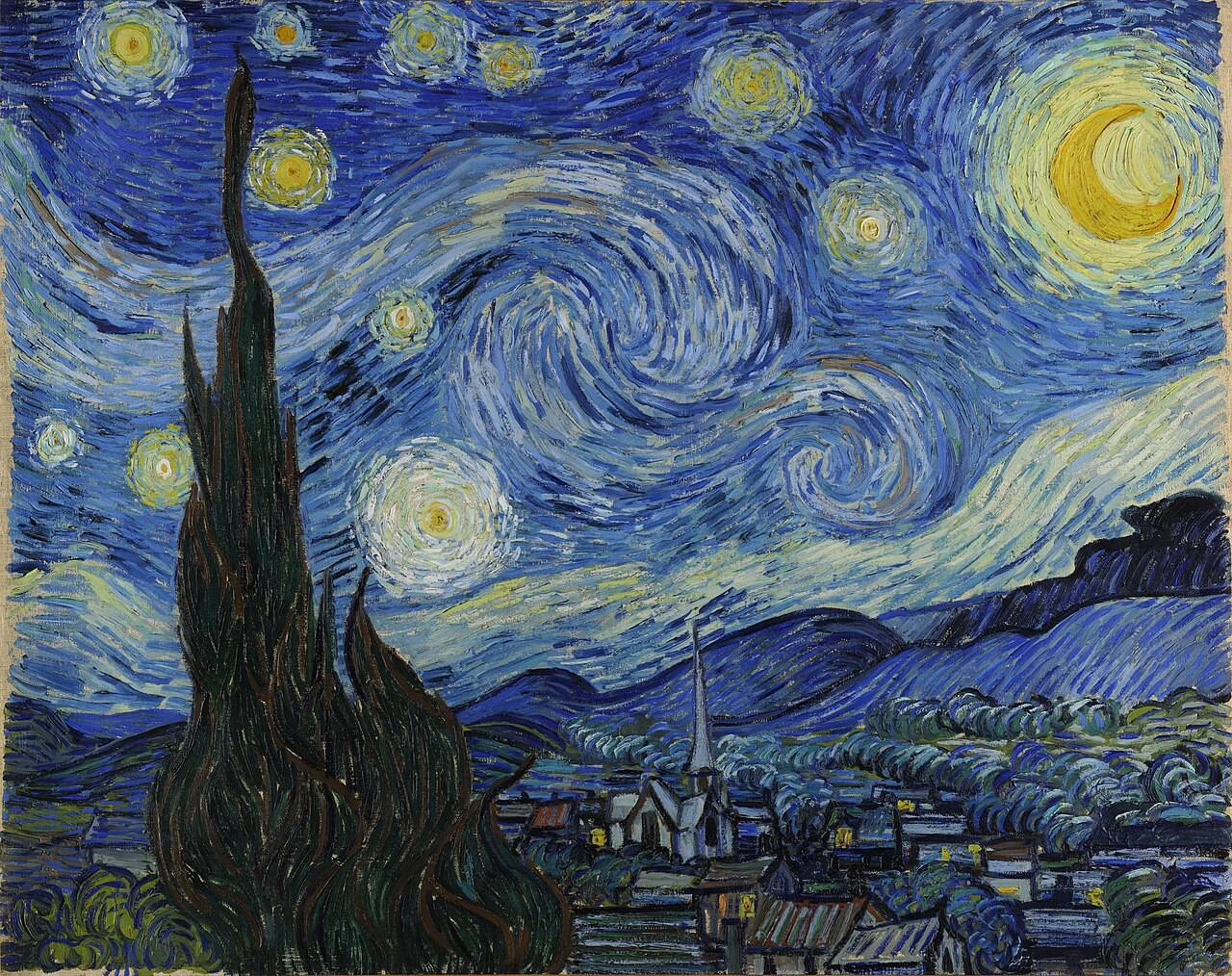
The Starry Night
Vincent van Gogh / 1889
The Museum of Modern ArtNew York · Collection & map
Inside the PaintingTHE STORY
01 Observation and Imagination
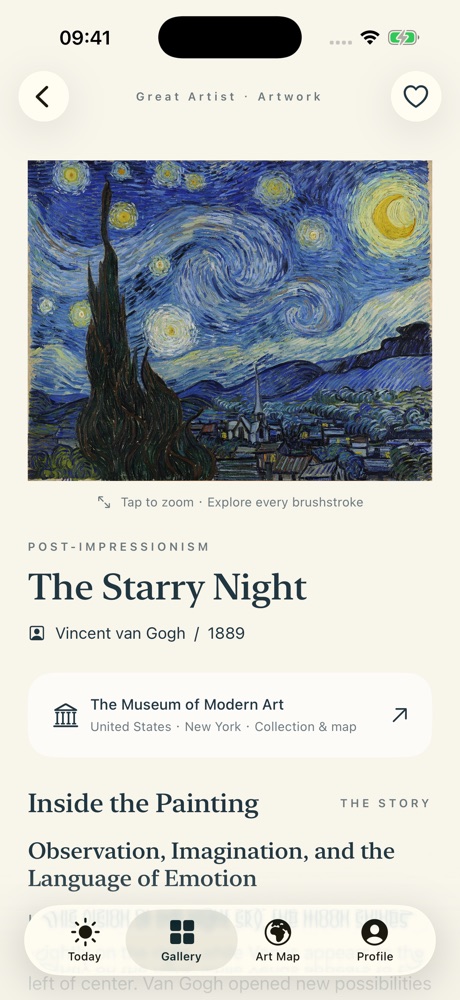
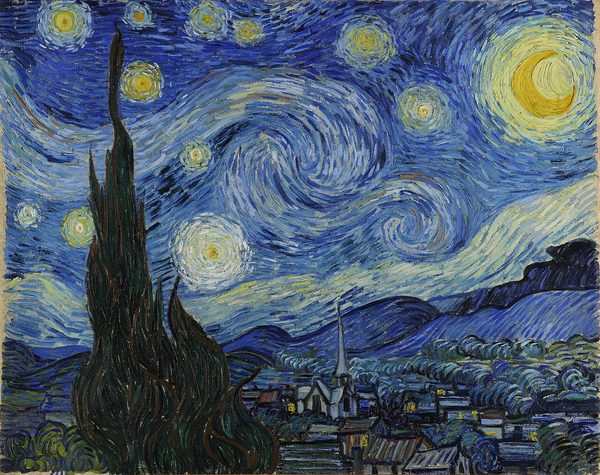
The star-filled night sky occupies three-quarters of this medium-sized oil painting. It surges and swirls, its twisting bands rolling across the canvas like waves. Luminous spheres punctuate the darkness: the crescent moon at the far right and Venus, the morning star, to the left of center.
Beneath this expressive sky lies a quiet village, its low houses clustered around a church. The steeple rises sharply above the undulating blue-black hills behind it. In the foreground, a flame-shaped cypress reaches almost to the top of the canvas, linking earth and sky.
02 Emotion, Vision, and an Individual Style
For many people, Vincent van Gogh’s name immediately recalls the episode in which he cut off part of his ear. Yet understanding him requires looking beyond the stereotype of the tormented, misunderstood genius. He was industrious, persistent, spiritually earnest, and often stubborn.
Largely self-taught, Van Gogh made more than 2,000 paintings, watercolors, drawings, and sketches. He also wrote extensively, mostly to Theo, using letters to develop his ideas about art.
 10/28The Starry Night · Van Gogh
 10/29Mona Lisa · Leonardo
 Today · Oct 30Primavera · Botticelli
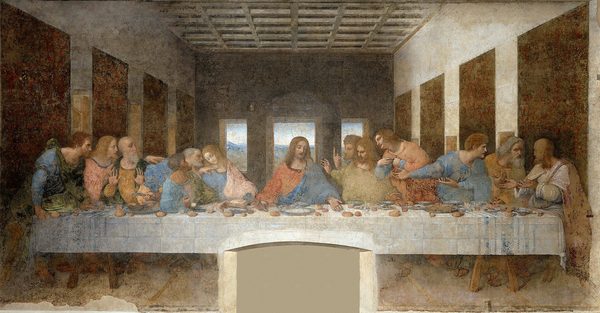 10/31The Last Supper · Leonardo
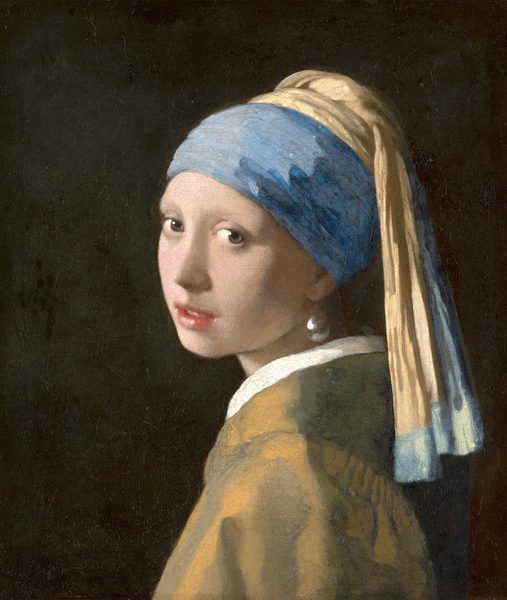 11/01Girl with a Pearl Earring · Vermeer